SAEMC is an annual collaborative event that brings together both the exploration and mining industries in South Australia.
Posters
Posters 2025
Sponsored by: AusIMM

Prizes
1: Best Honours
2: Best PhD
3: Peoples Choice for Best Poster
Judging panel

Peter Hill
Peter is a South Australian geologist and the Chair of the South Australian Committee of the AIG. Peter contributes to the SA geology community by running the very successful monthly SA AIG Geopub events, engaging with industry, students and research.

Janine Herzig
Janine is the Convenor of the MetPlant Conference Series, former NED of Base Resources & former Director & Past President of the AusIMM. Janine is active in many industry voluntary roles including: Honorary Secretary of the SA & NT Divisions of ATSE – the Australian Academy of Technological Sciences & Engineering; Executive President & Non-Executive Director of CEEC International –Coalition for Minerals Efficiency – providing leadership for its Advanced Energy Curves & current flagship Global Water Initiative.

Andrew Proudman
Andrew Proudman is a Principal Consultant at AMC Consultants. Andrew has 35 years of accumulated mineral industry experience in geology, geotechnical engineering and mineral asset valuations in both operational and consulting roles.
SAEMC Poster Presentation 2025
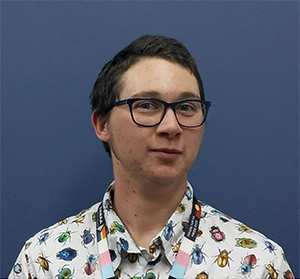
Honours: Poster 1
Arthaya Kai (image), Gujie Qian, Sarah Harmer
Title: Predicting acid and metalliferous drainage at a lead and zinc mine in Alaska
Abstract: This project characterised the mineralogical and geochemical characteristics of three mine wastes from a lead and zinc mine in Alaska, using AMIRA tests to rapidly assess the acid generation properties; Quantitative X-ray diffraction (QXRD) and Mineral liberation analysis (MLA) were used to determine the mineral composition of the sample; and kinetic leach columns were used to assess the mine waste leachate composition and likely metalliferous drainage, including mixing two mine wastes to find potential benefits greater than the average of the wastes. An increased metalliferous discharge was observed as a result of the mixing.
Bio: Arthaya Kai is an Honours student at Flinders University. Their thesis focussed on geochemical and mineralogical assessment of mine waste as part of a CRC TiME project.

Honours: Poster 2
Emma Jager
Title: Towards Improved Glauconite Geochronology: Sequential Leaching Approach for Solution-based K-Ca and Rb-Sr Dating
Authors and affiliations: Emma Jager, Juraj Farkas, Stefan Loehr, Cecilia Loyola, University of Adelaide (Department of Earth Sciences), Metal Isotope Group, emma.jager@adelaide.edu.au
Abstract: Glauconite, a green authigenic marine clay, has long been utilised in sedimentary geochronology owing to its in-situ formation and widespread occurrence in the geological record. However, its reliability has been questioned due to possible issues with contamination by non-authigenic or detrital phases and sensitivity to post-depositional alteration – both of which can impact glauconite ages.
Reference: Gopalan, K. (2008). Conjunctive K–Ca and Rb–Sr dating of glauconies. Chemical Geology, 247(1-2), 119-123. https://doi.org/https://doi.org/10.1016/j.chemgeo.2007.10.004
Bio: Emma Jager is an Honours student in Environmental Geoscience at the University of Adelaide, supervised by Associate Professor Juraj Farkas. Her research focuses on developing high-precision geochronological techniques using authigenic clays and novel isotope systems to improve the reliability of sedimentary dating. She is passionate about geochemistry, science communication, and fostering supportive, inclusive spaces for women in STEM. Outside the lab, Emma enjoys playing Ultimate Frisbee and spending time reading with her three dogs and three cats.
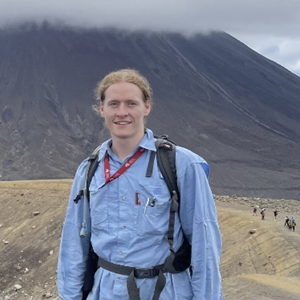
Honours – Poster 3
Title: Reassessing mantle versus crustal contributions in Gawler Craton IOCGs: Nd–S isotope evidence from Carrapateena.
Abstract: The origin of Iron Oxide Copper Gold (IOCG) deposits in the Gawler Craton is poorly understood, particularly the roles of the mantle and crustal reservoirs. In this study, new neodymium (Nd) and sulphur (S) isotope data from the ca. 1585 Ma Carrapateena deposit reveal limited mantle input, with Nd compositions indicating a dominantly crustal signature. Paragenetically constrained S isotope analyses show δ³⁴S values evolve from lighter early pyrite to heavier Cu-sulphides, reflecting changing sulphur sources or redox conditions. These results highlight minimal mantle contribution to Cu and an evolving sulphur system, refining models for metal and fluid reservoirs in the Gawler Craton IOCG province.
Bio: Fred is currently enrolled in an honours degree at the University of Adelaide, following the completion of his undergraduate degree in geology. His honours project investigates fluid sources for IOCG mineralisation in the Gawler Craton by using Nd and S isotopic constraints.

Honours – Poster 4
Abstract: Cobalt (Co) has become a geopolitically important critical mineral essential for advanced technologies, particularly energy storage. The southern Curnamona Province in South Australia and New South Wales hosts regionally extensive albitized metasediments (albitites) of the lower Willyama Supergroup that represent an ideal setting for Co enrichment, although the processes controlling Co-bearing albitite formation remain debated. This study investigates the origin and formation of Co-bearing minerals within albitites of contrasting metamorphic grade and redox conditions, comparing low-grade albitites of the Curnamona Group from Kalkaroo and Benagerie (Mulyungarie Domain) with high-grade albitites of the Thackaringa Group from Stirling Vale (Broken Hill Domain).
Petrological, geochemical, and field studies were integrated to constrain Co distribution and partitioning behaviour. Pyrite is identified as the primary Co-bearing mineral, with pyrrhotite, magnetite, amphibole, and biotite containing notable, but lower, Co contents. Pyrite in low-grade albitites contains the highest Co contents (up to ~ 3.7 wt.%), whereas more abundant pyrite in high-grade albitites incorporates less Co (≤0.9 wt.%) but yields greater bulk-rock contents of up to 1770 ppm, reflecting the affinity of Co for Fe-bearing sulphides.
Cobalt distribution is further influenced by a regional redox boundary separating oxidised, magnetite-rich albitites of the underlying Curnamona Group from less oxidised, pyrite-rich albitites of the overlying Thackaringa Group. The latter conditions, combined with evidence for a supplementary mafic contribution, favoured enhanced Co enrichment in the Thackaringa Group albitites of the Stirling Vale region.
These findings support an epigenetic model, whereby diagenesis of evaporitic sediments in a sabkha-type setting released oxidised albitizing brines that leached Co from surrounding rocks, leading to the formation of cobaltian pyrite and other Co-bearing minerals in response to reducing conditions during early albitization. This study provides new insights into the formation of Co-bearing albitites within the southern Curnamona Province, demonstrating the potential for albitite-hosted Co resources as an under-explored commodity for Australia’s critical mineral industries.
Bio: After completing my honours, I am planning to start my career in the exploration and mining industry. I would love to begin my geology career in South Australia as there is lots of potential for mineral exploration and I would like to benefit and contribute to the mineral industry of my homestate. This is also partly why I decided to focus my honours project on the Albitites of the Curnamona Province and their association with cobalt mineralisation in South Australia. I am also interested in doing a geochemistry and petrology based PhD after getting a few years work experience in the industry, hopefully supported by a mining company, to further my career and allow me to work in consulting and as a petrologist which the industry needs more of. I’ve also been working at Adelaide Petrographic Laboratories for the past four years where I have been making geological and archaelogical thin sections for academics at university institutions and mining and exploration companies which I have come to enjoy very much, and am interested in being involved with in the future with regards to potential petrological consulting work.
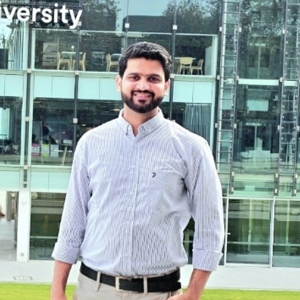
PhD – Poster 1
Title: Scaling Up: Advanced Leaching Studies
Abstract: The research investigates the advanced prediction and mitigation of acid and neutral metalliferous drainage (AMD/NMD) from iron ore waste rock through scaled-up leaching tests. Using Intermediate Bulk Container (IBC) and Kinetic Leach Column (KLC) systems, the study examines pyrite oxidation, acid–base behaviour, and metal(loid)s release under near-field conditions. Integrating mineralogical and geochemical analyses (SEM, MLA, ABA), the work aims to improve the predictive capability of AMD formation and assess site-specific remediation strategies such as carbonate amendments and surface passivation. Outcomes will enhance understanding of mine-waste behaviour and contribute to sustainable closure practices for iron-ore operations.
Bio: Muhammad Faizan, a PhD candidate in Chemical Sciences at Flinders University, is working on CRC TiME Project 3.10. His research focuses on predicting and mitigating acid and neutral metalliferous drainage (AMD/NMD) through mesoscale leaching studies, mineralogical–geochemical analyses, and development of sustainable mine-waste remediation strategies.

PhD – Poster 2
a Flinders Microscopy and Microanalysis, Flinders University
Title: Scale-up Leaching and Remediation Studies for Legacy Cu-Pb-Zn Mine Waste
Abstract: Historic waste management strategies at a legacy Cu-Pb-Zn mine site in Tasmania, Australia, has resulted in the accumulation of decades of untreated waste rock, leading to the release of acid and metalliferous drainage (AMD) into the local environment. As part of CRC TiME (Transformations in Mining Economies) Project 3.10 – Improved prediction, remediation and closure of AMD/NMD sites by examination of mine waste behaviour at the meso-scale, this study aims to characterise the local AMD risk through geochemical classification of waste rock samples and assess site-specific remediation strategies through comparison of lab-scale (4 kg) and meso-scale (1.6 t) leaching experiments.
Bio: Alex is a PhD student at Flinders University. With a passion for Physics and Chemistry, his PhD, in collaboration with CRC TiME, is focussed on improving the understanding of Acid & Metalliferous Drainage (AMD) from active and legacy mine sites in Tasmania.
Looking to make an impact on the Australian mining industry, Alex hopes that his PhD is the first step towards a successful career in a research field that he loves and will lead to an improved understanding of AMD on a local, national and global scale.

PhD – Poster 3
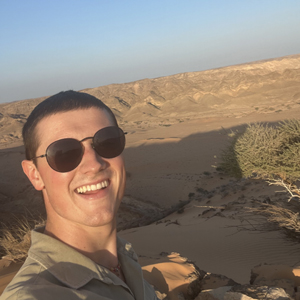
Graham Heinson and David Baker (image)
University of Adelaide
Title: Carbonatite melt at the base of the Gawler Craton: insights from 3D anisotropic inversion of AusLAMP MT data
One of the more remarkable results from AusLAMP and legacy MT programs over the last decade has been in imaging a region of resistivity < 10 Ohm.m in the upper mantle in or beneath the Archean core of the Gawler Craton. Similar features have been observed beneath the Archean Superior Craton in Canada but are not common globally. However, there has been uncertainty on depth, resistivity and causal mechanism of the low resistivity. In this study, we undertake new isotropic and anisotropic 3D inversions of all available MT data across the Gawler Craton and its margin to the Musgrave Province. From the isotropic modelling we find that the low resistivity region (<10 Ohm.m) is at depth 180 to 220 km with extent 300 x 100 km. The region is beneath the seismically determined mechanical lithosphere-asthenosphere boundary at 180 km, coincident with a drop in shear-wave velocity 4.8 to 4.6 km/s. A region of low resistivity (~100 Ohm.m) is also evident in the mantle from 40-60 km within the boundary of the Gawler Craton but aligned and west of the Coorabie Shear Zone. Anisotropic inversion shows a factor of 10 between lowest resistivity aligned NW – SE (1 Ohm.m) and 10 Ohm.m orthogonally. We suggest that such anisotropy is due to metasomatized cracks in the lower lithosphere from melting of a shallow-subducting carbonate-rich oceanic plate from (what is now) the SW. The most plausible causal mechanism is small fractions of carbonatite melt that are not interconnected, as fluorine-rich phlogopite is only stable to temperatures of 1400 C. Carbonatite melts exhibit very low resistivity, typically <0.01 Ohm.m, making them significantly more conductive than silicate melts or hydrated mantle olivine. The sub-Moho conductors may also be due to carbon, from migration of carbonatite melts at the margin of the craton associated with rifting aligned with the Coorabie Shear Zone, and precipitation of graphite in reducing environments.
PhD – Poster 4
Abstract: Copper (Cu), a critical mineral, is used in batteries, solar panels and wind turbines and is vital for the renewable energy transition. Sedimentary-hosted Cu deposits are the second most important source of copper globally. The Neoproterozoic-aged stratigraphy of the Stuart Shelf in South Australia is currently being investigated for its bounty of sedimentary-hosted Cu occurrences. However, the age and stratigraphic relationships of Precambrian sedimentary successions are limited by a lack of fossils and dateable lithologies. Hence, constraining the ages of Neoproterozoic sedimentary successions on the Stuart Shelf is imperative to understanding and exploring sedimentary-hosted Cu in South Australia. This study is using novel LA-ICP-MS techniques to date the depositional ages of sedimentary rocks in sedimentary Cu-bearing Stuart Shelf. U–Pb carbonate mapping and Re–Os geochronology is applied to the Ediacaran Nuccaleena Formation cap carbonate, which sits conformably atop the Cryogenian Elatina Formation and is known for hosting a Global Boundary Stratotype Section and Point (GSSP, or ‘golden spike’). This addresses the chronological ambiguity of the sedimentary-hosted Cu deposits of the Stuart Shelf and provides the first radiometric age of a Precambrian golden spike.
Bio: Nicko is a PhD student from the University of Adelaide. Born and raised in Sydney, Nicko moved to South Australia for the fantastic educational opportunities and the vibrant geoscience community. Nicko’s PhD is focussing on the formational history of resource-laden Neoproterozoic sedimentary successions in Oman and Australia.

PhD – Poster 5
1. School of Physics, Chemistry and Earth Sciences, University of Adelaide, Australia
2. Indonesia State College of Meteorology, Climatology, and Geophysics, Indonesia
Title: The lithospheric resistivity signature of Cenozoic volcanism in eastern Australia
Abstract: One of the most remarkable features of the eastern Australian continent are the Cenozoic age (65 Ma to present) volcanoes over 5000 km north-south and up to 500 km west-east, with no significant age progression, even though the continent has moved at a rate of up to 75 km/Ma over much of this time. Two main theorems have been advanced to explain the age-independent volcanism: (1) Decompression melting from the transition zone due to volatile content from subducted slab stagnating at the transition zones (> 410 km). (2) Asthenospheric shear and edge-driven convection due to variations in thermal and mechanical lithospheric thicknesses. In this poster we have undertaken a new 3D inversion of all available MT across NSW, Victoria, Tasmania and eastern SA (approximately 800 sites) to define the broad-scale resistivity of the lithosphere and asthenosphere.
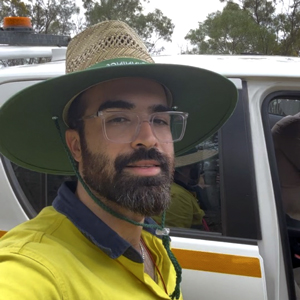
Bio: Relly Margiono is a second-year PhD candidate at the University of Adelaide. His research applies magnetotelluric (MT) methods to improve subsurface imaging and advance the understanding of natural hydrogen systems and volcanic processes. He focuses on study areas across South, Central, and Eastern Australia, working under the supervision of Professor Graham Heinson with funding from the Indonesia Endowment Fund for Education (LPDP).
PhD – Poster 6
Abstract: Interpreting large, multi-parameter geophysical datasets remains a central challenge in subsurface characterization. This study presents a hybrid machine learning framework that integrates self-supervised representation learning with a semi-supervised self-organizing map (SOM) to classify geological facies in the Mundi Mundi region, Curnamona Province, Australia. The model extracts a 32-dimensional embedding that captures spatial and multi-modal relationships, while fuzzy clustering and limited geological supervision enhance interpretability. The results reveal geophysically coherent facies consistent with mapped lithologies, highlighting the potential of combining self-supervised learning and SOMs for efficient regional-scale geological mapping and exploration targeting.
Bio: I am a PhD researcher at the University of Adelaide, focusing on the integration of multi-modal geophysical datasets using advanced machine learning approaches to enhance subsurface characterization and mineral exploration targeting. I am passionate about leveraging artificial intelligence to uncover hidden geoscientific patterns and accelerate mineral systems discovery.

PhD – Poster 7
Title: From Blasting to Grinding: A Cost-Aware AI Framework for Mine-to-Mill Decisions
Abstract: Integrating technical and financial factors throughout the mining value chain remains a major challenge in achieving sustainable productivity improvements. Each stage of operation from blasting and crushing to milling and classification has complex interdependencies that directly influence throughput, energy consumption, and cost efficiency. Traditional optimisation approaches often focus on isolated processes, achieving local gains that can inadvertently increase overall system cost. To address this limitation, this study presents a cost-aware, AI-driven meta-modelling framework that links upstream design decisions to downstream performance and financial outcomes across the full mine-to-mill chain. The framework combines high-fidelity simulation using the Integrated Extraction Simulator (IES) with machine learning models capable of rapidly predicting both technical and cost responses. Over three million simulation scenarios were generated using calibrated process flowsheets of a typical open-pit gold operation, covering blasting, screening, crushing, stockpiling, and semi-autogenous (SAG) milling. Each simulation accounted for variations in geological and operational parameters, including unconfined compressive strength, burden, spacing, hole diameter, explosive density, velocity of detonation, screen cut size, crusher setting, and SAG operating conditions such as speed, load, and water content. The outputs particle size distributions, throughput, and energy consumption were used to train AI based meta-models that achieved predictive accuracies above 90%. These surrogate models replicate the behaviour of detailed simulations while allowing rapid evaluation of millions of potential design configurations. To connect technical performance with economic impact, a set of stage-wise cost models was developed and integrated into the predictive framework. These models translate fragmentation, throughput, and energy consumption into cost per tonne for each stage, including drilling, blasting, crushing, screening, conveying, stockpiling, and grinding. The results reveal clear non-linear cost responses and cross-stage dependencies. For example, finer fragmentation achieved through higher explosive density and charge energy can reduce total mine-to-mill by lowering the energy demand in downstream comminution. However, excessive charge energy yields diminishing returns, underscoring the need for balanced design. At the comminution stage, the SAG mill exhibits distinct optimum operating windows where total system cost is minimised. Analyses show that mill load, and speed follow U-shaped cost–throughput relationships in an optimum range. Operating outside this window increases energy intensity and wear, raising total cost per tonne.
Bio: Pouya Nobahar is a PhD student at the ARC Training Centre for Integrated Operations for Complex Resources at the University of Adelaide, with over 7 years of experience in the mining sector and holding A.Sc., B.Sc., and M.Sc. degrees in mining engineering. His research focuses on developing an integrated system to optimize the mining value chain by linking resources to downstream products through dynamic modelling, simulation, and machine learning. Pouya’s work involves large-scale simulations to optimize pit and operational settings, and he is actively exploring machine learning techniques to predict ore processing outcomes and improve throughput. He is committed to advancing sustainability practices within the mining industry and aims to address the challenges of resource management through innovative solutions. In addition, Pouya is passionate about collaboration and knowledge sharing, often engaging with industry experts to enhance the impact of his research.

PhD – Poster 8
2. Faculty of Sciences, Engineering and Technology, University of Adelaide, Adelaide 5005, Australia
Title: X-ray Computed Tomography for Geometallurgical Ore Texture Analysis: Implications for Comminution Prediction
Abstract: The characterisation of ore texture is essential for understanding comminution behaviour, as mineral grain size, spatial distribution, and intergrowth patterns directly influence breakage and liberation efficiency. X-ray Computed Tomography (XCT) offers a high-resolution, non-destructive approach to three-dimensional ore texture analysis, providing detailed insights into mineralogical heterogeneity without extensive sample preparation. This study investigates the use of XCT-derived Grey-Level Co-Occurrence Matrix (GLCM) metrics to quantify ore texture and evaluate their implications for comminution performance. By extracting texture parameters such as contrast, homogeneity, and entropy from XCT cross-sections, we distinguish ore domains according to their internal structural characteristics. Coarse-grained ores exhibit higher contrast and more ordered mineral distributions, implying easier liberation and lower energy requirements during grinding. In contrast, fine-grained, interlocked textures show lower contrast and higher entropy, reflecting greater resistance to breakage and more complex comminution behaviour. These findings establish a framework for classifying ore textures and anticipating potential grinding challenges. While further work is needed to establish quantitative correlations with comminution indices, the results confirm that XCT can effectively characterise ore variability, textural domains, and structural discontinuities, thereby supporting geometallurgical block modelling and ore classification. The ability to resolve fine-scale textural variations enhances mine-to-mill optimisation by improving feed blending and processing efficiency. Overall, this study demonstrates the potential of XCT-based texture analysis as a standalone geometallurgical tool for predicting comminution performance, with future work focused on integrating XCT-derived texture metrics with laboratory grindability data to develop predictive models.

PhD – Poster 9
Junlin
Title: Dynamic optimisation of ore flow from uncertain resources to ROM stockpiles and processing plant
Abstract: Traditional sub-level caving (SLC) production scheduling models primarily focus on optimising draw control, while often neglecting the integration of post-extraction ore flow, including stockpiling and processing constraints. This omission can lead to inefficiencies in ore blending, increased dilution, and suboptimal resource utilisation. To address this limitation, this study develops a mixed-integer programming (MIP) model that explicitly considers ore flow across the entire mining value chain. The proposed approach integrates a ring-level block model, enabling more detailed constraint formulation and more precise production sequencing compared to conventional three-dimensional (3D) stope-level models. Additionally, the model incorporates deleterious element constraints and stockpiling strategies to improve ore quality control and minimise contamination penalties. The model is implemented using the Gurobi optimiser and validated through a case study of an iron oxide copper-gold (IOCG) deposit. The results demonstrate that the proposed method enhances scheduling flexibility, increases operational efficiency, and improves ore quality management, while maximising net present value (NPV).
Bio: Junlin is a PhD candidate in Mining Engineering at the University of Adelaide. His research focuses on integrating real-time ore tracking with dynamic production scheduling optimisation in mining operations, with a strong emphasis on optimising ore flow throughout the entire mining value chain. This innovative work is conducted under the ARC Training Centre for Integrated Operations for Complex Resources.
He has two years of hands-on experience as a mining engineer at a dolomite open-pit mine, where he was involved in optimising mining operations and designing production parameters. This practical experience significantly deepened his understanding of mine planning and operational efficiency. During his Master’s studies, Junlin specialised in mine planning and production parameter optimisation, further refining his expertise in developing production strategies and technological solutions to address mining challenges. Outside of his academic pursuits, Junlin enjoys basketball, swimming, and classical music

PhD – Poster 10
Amir
Title: Measure the rock you can’t sample! Geophysics for practical rock mechanics.
Abstract: Natural rock is never a homogeneous monolith; it’s full of cracks, fractures, and geological structures that change from metre to metre and at scales below! To shed light on this 3-dimensional complexity, engineers take rock-core samples, test them to classify the rock, predict its behaviour, and measure its strength. They then extrapolate these results across the entire mine site! This embeds simplifying assumptions. How far can a few samples really speak for thousands of cubic metres of rock? How much extra safety margin must we consider to cover what we don’t know? And what if the unseen rock between holes breaks the rules defined by our limited tests? This research project is about listening to the rock as the drill bit turns, capturing the seismic pulses, adding borehole data (rock mechanical and geophysical) and, with data analytics and machine learning, translating it into an unbroken record of information offering insights into whole-rock mass mechanics.
Bio: Amir is a PhD candidate at the University of Adelaide, having started in February 2024. He holds a bachelor’s degree in mining engineering, completed in 2019, and a master’s degree in mining engineering (specializing in Rock Mechanics), completed in 2022. With over 4 years of professional experience in mining engineering and R&D, Amir has contributed to projects related to mining operations, geotechnical analysis, and research-driven innovations in related fields. His PhD research focuses on using cross-borehole seismic tomograms, along with other data sources, to predict rock mass parameters. Amir’s goal is to innovate, develop commercially viable ideas, and make significant contributions to the mining industry.

PhD – Poster 11
Title: Linking Blast Design to Material Flow and Dilution in Sublevel Caving Using Blender Physics Engine
Abstract: Sublevel caving (SLC) is a major mass-mining method for steep, large ore bodies, where gravity drives fragmented rock through stopes and drawpoints. Optimizing blast-induced fragmentation is critical for ore recovery, dilution control, Load-Haul-Dump (LHD) efficiency, and downstream performance in haulage and crushing. Because fragment-size distribution governs flow at drawpoints, understanding how rock properties, blast design, and operating conditions shape fragmentation is essential.
Bio: Reza is a mining engineer specializing in blast design and mine optimization. He gained early experience in rock mechanics and fracture toughness research during his bachelor’s, and advanced his numerical modelling skills using FLAC3D, Rhino, and Plaxis during his master’s. Currently, he works with the Mechanistic Blast Model (Elfen engine) and Blender physics engine to determine optimal fragmentation in underground mining and reduce operational costs.
PhD – Poster 12
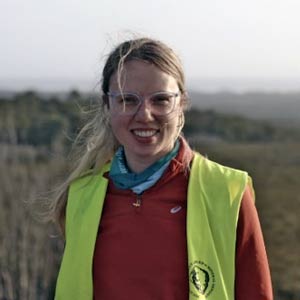
J. M. Hiller (image) ¹, S. Löhr ², L. Morrissey ², A. Baldermann ³, J. Payne ¹, C. Doolette ¹,
C. Krapf 4, C. Spandler ²
1 University of South Australia, Australia
2 University of Adelaide, Australia
3 Graz University of Technology, Austria
4 Geological Survey of South Australia, Australia
e-mail: jasmin.hiller@mymail.unisa.edu.au
Title: Rare Earth Elements in Koppamurra (South Australia): Transport and Capture in a Non-Traditional Environment
The global demand for Rare Earth Elements (REEs) is increasing, encouraging exploration for new REE deposits. Ion-adsorption type REE deposits are typically associated with tropical climates, where intense weathering of a protolith leads to the enrichment of REEs in clays. In Koppamurra, South Australia, a clay-hosted REE deposit has also been identified. However, South Australia lacks both a tropical climate and a suitable REE protolith. Instead, Koppamurra exhibits a complex transport system, which has led to the accumulation of REEs in clays, secondary carbonates, and cerianite. In this study, the key features of the mineralisation will be identified.
Bio: Jasmin Hiller completed her Master of Science in Applied Geosciences at the Technical University of Leoben in Austria, specializing in Economic Geology. Since 2024, she has been pursuing a PhD at the University of South Australia. Her research focuses on the mineralisation of Rare Earth Elements (REE) in ion-adsorption clays, with a particular emphasis on the Koppamurra deposit in South Australia. The aim of her study is to advance the understanding of the deposit’s formation processes and the controls on REE enrichment.
PhD – Poster 13
Chryselle Mancenido
Title: Context-driven integration workflow of geochemistry and mineralogy for rapid and interpretable rock classification
Abstract: Rapid and consistent lithological classification is critical in mineral exploration, yet conventional manual logging is time-consuming and subjective, while geochemistry-based machine learning models often fail to generalize to field observations. This study presents a hybrid decision-tree workflow that integrates geochemical and mineralogical information to produce faster and more objective first-pass lithology logs.
The workflow begins with a a baseline geochemistry-only model trained on CIPW normative labels achieved high internal accuracy (~83–89%) but transferred poorly to manually logged data (~10–17%), highlighting a strong domain shift. The workflow is augmented with a mineral-first tree based on IUGS QAPF mineralogical rules derived from HyLogger thermal infrared (TIR) relative mineral abundance data. The hybrid decision tree produced results that aligned more closely with observed mineral assemblages and alteration trends, allowing rapid, interpretable classification without sacrificing geological meaning.
This context-driven integration of geochemistry and mineralogy offers a practical, transparent alternative to black-box models. It enables geologists to obtain reliable lithological context quickly, improving decision-making during exploration while maintaining interpretability and reproducibility.
Bio: Chryselle is a PhD candidate at the University of South Australia. She has five years of experience as an exploration geologist and a Master’s degree in geometallurgy. Her work focuses on developing methodologies for precise geological characterization by integrating disparate sensor datasets by employing assisted machine learning techniques. Chryselle has a growing interest in data science and its practical applications in geology. Her project is a part of the ARC Training Centre in Integrated Operations for Complex Resources.
.